Low pressure Permannent Magnetic VSD screw air compressor LBPM serie
The LBPM series low-pressure variable speed screw air compressors are designed for industrial processes requiring high and fluctuating air delivery at pressures from 2 to 5 bar. The permanent magnet motor and VSD control regulate compressor output according to current demand, helping maintain stable pressure and reduce unnecessary electricity consumption.
The series includes models with power ratings from 37 to 250 kW and free air delivery from 3.6 to 75 m³/min. These compressors are suitable for pneumatic conveying, cement production, textile manufacturing, aeration, blowing and other continuous processes where standard working pressure of 7–10 bar is not required.
LBPM Low-Pressure Screw Air Compressors with Permanent Magnet Motors
The LBPM series combines a screw airend, permanent magnet motor and variable speed control. This configuration allows compressor speed to change according to actual compressed air demand.
When production load decreases, the control system reduces compressor output. As demand rises, motor speed increases within the operating range of the selected model. This allows air delivery to follow the requirements of the industrial process more closely.
Low-pressure compressors are designed for systems that do not require the standard industrial pressure of 7, 8 or 10 bar. Generating air directly at the required 2–5 bar range reduces losses associated with compressing to unnecessarily high pressure and reducing it afterwards.
Models with Free Air Delivery from 3.6 to 75 m³/min
The LBPM series includes nine main models:
- SCR420LBPM – 3.6–12.0 m³/min;
- SCR530LBPM – 4.5–15.0 m³/min;
- SCR830LBPM – 6.45–21.5 m³/min;
- SCR950LBPM – 8.6–28.8 m³/min;
- SCR1300LBPM – 10.8–36.8 m³/min;
- SCR1500LBPM – 14.2–47.4 m³/min;
- SCR1900LBPM – 16.5–55.0 m³/min;
- SCR2100LBPM – 18.0–60.0 m³/min;
- SCR2700LBPM – 22.5–75.0 m³/min.
The SCR420LBPM and SCR530LBPM are suitable for installations with low to medium air demand. The SCR830LBPM, SCR950LBPM and SCR1300LBPM can supply larger process lines. The SCR1500LBPM, SCR1900LBPM, SCR2100LBPM and SCR2700LBPM are intended for large industrial systems with high and continuous consumption.
The stated values represent the output range of each compressor. The exact operating point must be matched to required pressure, consumption and pipeline characteristics.
Power Ratings from 37 to 250 kW
The actual power range of the LBPM series is 37 to 250 kW. Required power depends on both compressor size and working pressure.
For example, the SCR420LBPM uses:
- 37 kW at 2–3 bar;
- 45 kW at 4 bar;
- 55 kW at 5 bar.
The SCR1500LBPM uses:
- 132 kW at 2–3 bar;
- 160 kW at 4 bar;
- 185 kW at 5 bar.
The largest SCR2700LBPM uses 220 kW at 3 bar and 250 kW at 4 bar. Motor power should therefore not be evaluated separately from required pressure and air delivery.
Working Pressure from 2 to 5 Bar
The complete series covers working pressures from 2 to 5 bar, although the available configurations differ between models.
Models up to the SCR1500LBPM include versions for pressures up to 5 bar. The SCR1900LBPM is available for 2, 3 and 4 bar, while the SCR2100LBPM and SCR2700LBPM are listed in 3 and 4 bar configurations.
The lowest pressure at which the industrial process operates reliably should normally be selected. Only actual pressure losses through pipelines, filters, coolers and other equipment should be added.
In systems with high and continuous air delivery, even a small unnecessary pressure increase can lead to significantly higher electricity consumption.
Advantages of Variable Speed Control
Variable speed control is particularly useful in processes where compressed air demand changes between production stages.
The main advantages include:
- smooth output regulation;
- adjustment to fluctuating demand;
- more stable system pressure;
- reduced operation without useful air production;
- fewer sudden load changes;
- smoother motor starting;
- improved balance between produced and consumed air.
Actual efficiency depends on correct compressor sizing. An oversized compressor, excessive pressure setting or significant air leakage can limit the benefits of VSD control.
Why Use a Low-Pressure Compressor
When an industrial process requires 3 or 4 bar, using a standard compressor designed for 8 or 10 bar and reducing the pressure afterwards can be inefficient.
A low-pressure screw air compressor produces air directly within the required range. This reduces the difference between generated and actually used pressure, which is particularly important for high-flow, continuous-duty applications.
Pressure losses must still be considered. When the process requires 3 bar at the final point of use, the compressor should compensate for actual pipeline losses without being set to an excessively high value.
Applications of LBPM Low-Pressure Compressors
Pneumatic Conveying
The compressors can supply air for transporting powdered and granular materials. Such systems are used for cement, flour, plastic granules, minerals and other bulk products.
Cement and Construction Material Production
In cement plants and building material facilities, low-pressure air can be used for conveying, aeration, homogenisation and other manufacturing processes.
Textile Manufacturing
Textile facilities may use continuous air flow for production machinery, material movement and cleaning processes.
Aeration and Blowing
High air delivery at low pressure is suitable for aeration, cooling, drying, blowing and processes that do not require high compression pressure.
Large Manufacturing Installations
Models delivering up to 75 m³/min can be used in centralised systems and facilities with high continuous air demand.
DN80 to DN200 Outlet Connections
Outlet size increases according to compressor capacity:
- SCR420LBPM and SCR530LBPM – DN80;
- SCR830LBPM and SCR950LBPM – DN100;
- SCR1300LBPM, SCR1500LBPM and selected SCR1900LBPM configurations – DN150;
- SCR2100LBPM – DN150;
- SCR2700LBPM – DN200.
The SCR1900LBPM has a different configuration at 2 bar: dimensions of 4300 × 2200 × 2200 mm, weight of 8000 kg and a DN200 outlet. Its 3 and 4 bar versions have smaller dimensions, a weight of 6000 kg and a DN150 connection.
Pipeline diameter must be selected according to maximum air delivery, installation length and permitted pressure drop. This is critical in low-pressure systems because a relatively small loss can represent a significant proportion of total working pressure.
How to Select the Correct LBPM Compressor
Measure Actual Air Consumption
For an existing installation, measurements across different operating conditions are recommended. For a new system, average, maximum and minimum demand should be calculated.
Determine Pressure at the Point of Use
Establish the minimum pressure at which the process operates reliably. Then add only the actual losses through pipelines and equipment.
Compare Power at the Required Pressure
The same compressor model may use different motor power depending on working pressure. Technical evaluation must use the configuration matching actual operating conditions.
Analyse Changes in Load
When consumption varies considerably, a VSD compressor can adapt its output. For systems operating continuously near maximum load, different compressor arrangements should also be compared.
Check Installation Conditions
The models weigh between 2500 and 9000 kg. A suitable foundation, adequate ventilation, service space and a planned transport route are required.
Designing a Low-Pressure Compressed Air System
The compressor is only one component of the installation. At air delivery levels up to 75 m³/min, pipework, air storage, cooling and air treatment equipment must be designed carefully.
Depending on the process, the system may require:
- air receivers;
- coolers;
- air dryers;
- line filters;
- condensate drainage systems;
- automatic control of multiple compressors.
For critical production processes, several compressors can be combined to provide redundancy and more flexible total air delivery control.
Consultation for LBPM Compressor Selection
Correct selection requires data about minimum and maximum air demand, pressure at the final point of use, operating hours, load profile and pipeline characteristics.
Contact our team for technical consultation and assistance in selecting an LBPM series low-pressure screw air compressor according to the requirements of your industrial process.
Frequently Asked Questions
What is the air delivery range of the LBPM series?
The series covers free air delivery from 3.6 to 75 m³/min.
What is the power range?
The actual range shown in the model tables is 37–250 kW.
Are all models available for 5 bar?
No. Models up to the SCR1500LBPM include 5 bar versions. The larger SCR1900LBPM, SCR2100LBPM and SCR2700LBPM are listed in configurations up to 4 bar.
What is the difference between the LB and LBPM series?
Both series are designed for low-pressure applications. The LBPM series provides variable air delivery and uses permanent magnet motors with VSD control to adapt output to fluctuating demand.
Is the series suitable for pneumatic conveying?
Yes. Its high air delivery and working pressure up to 5 bar make it suitable for various pneumatic material conveying systems.
What is the largest model?
The SCR2700LBPM delivers from 22.5 to 75 m³/min and uses 220 kW at 3 bar or 250 kW at 4 bar.
Showing all 9 results
-
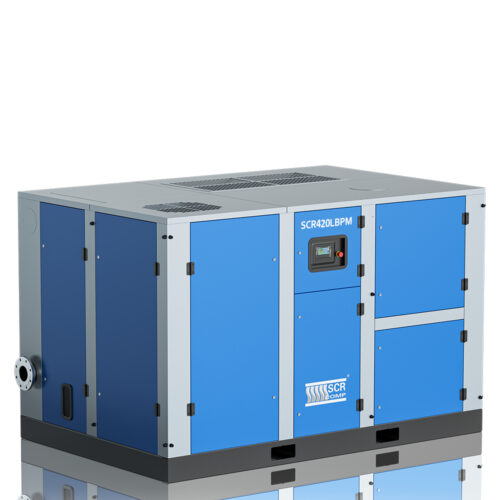
Low pressure Permannent Magnetic VSD screw air compressor SCR420LBPM
Power Range: 37–55 kWFree Air Delivery: 3.6–12.0 m³/minWorking Pressure: 2 / 3 / 4 / 5 bar -
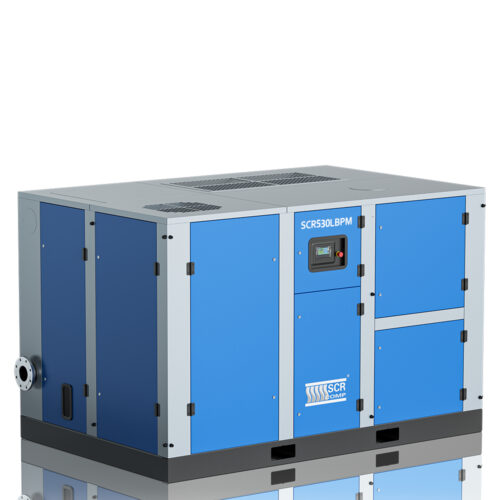
Low pressure Permannent Magnetic VSD screw air compressor SCR530LBPM
Power Range: 45–55 kWFree Air Delivery: 4.5–15.0 m³/minWorking Pressure: 3 / 4 / 5 bar -
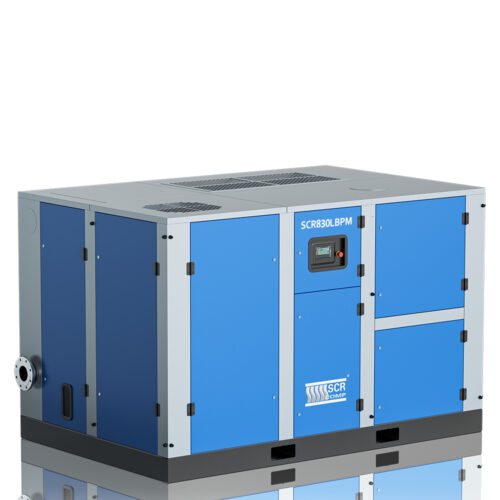
Low pressure Permannent Magnetic VSD screw air compressor SCR830LBPM
Power Range: 63–90 kWFree Air Delivery: 6.45–21.5 m³/minWorking Pressure: 3 / 4 / 5 bar -
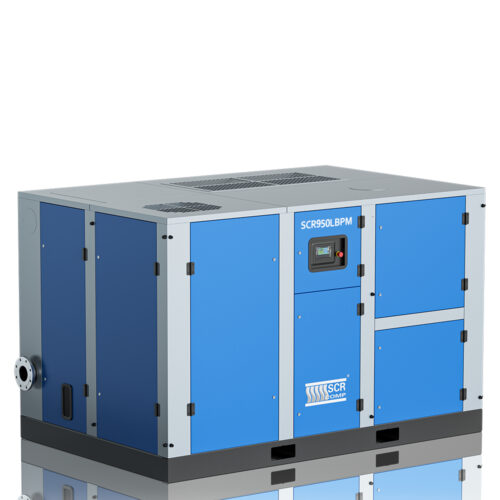
Low pressure Permannent Magnetic VSD screw air compressor SCR950LBPM
Power Range: 90–110 kWFree Air Delivery: 8.6–28.8 m³/minWorking Pressure: 2 / 3 / 4 / 5 bar -
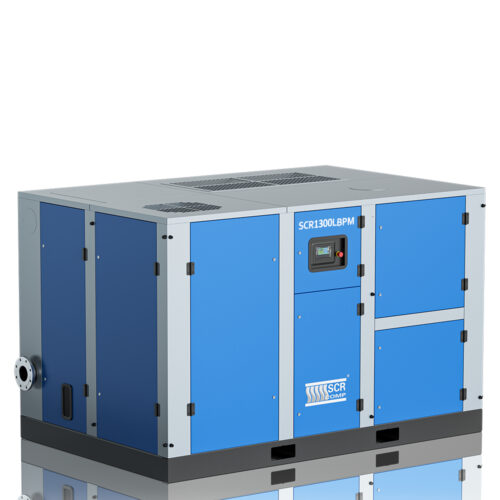
Low pressure Permannent Magnetic VSD screw air compressor SCR1300LBPM
Power Range: 110–160 kWFree Air Delivery: 10.8–36.8 m³/minWorking Pressure: 2 / 3 / 4 / 5 bar -
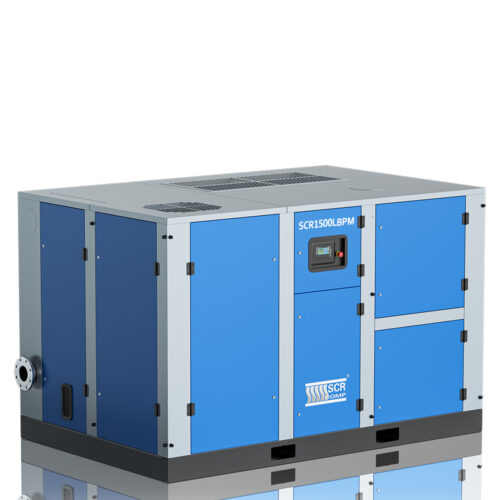
Low pressure Permannent Magnetic VSD screw air compressor SCR1500LBPM
Power Range: 132–185 kWFree Air Delivery: 14.2–47.4 m³/minWorking Pressure: 2 / 3 / 4 / 5 bar -
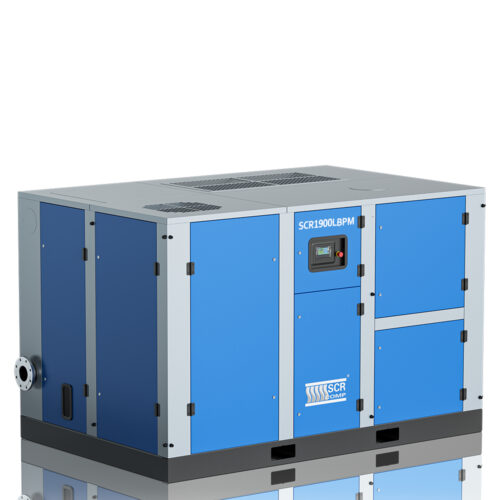
Low pressure Permannent Magnetic VSD screw air compressor SCR1900LBPM
Power Range: 160–200 kWFree Air Delivery: 16.5–55.0 m³/minWorking Pressure: 2 / 3 / 4 bar -
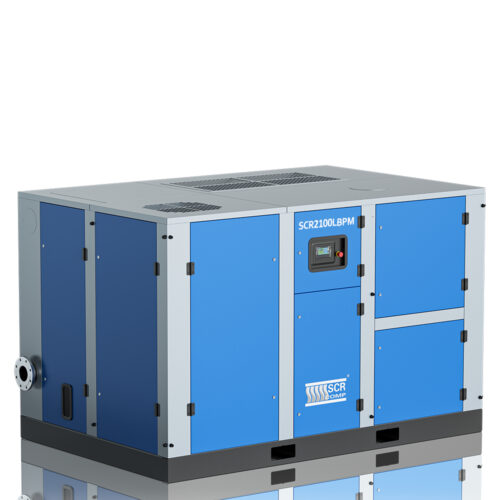
Low pressure Permannent Magnetic VSD screw air compressor SCR2100LBPM
Power Range: 200–220 kWFree Air Delivery: 18.0–60.0 m³/minWorking Pressure: 3 / 4 bar -
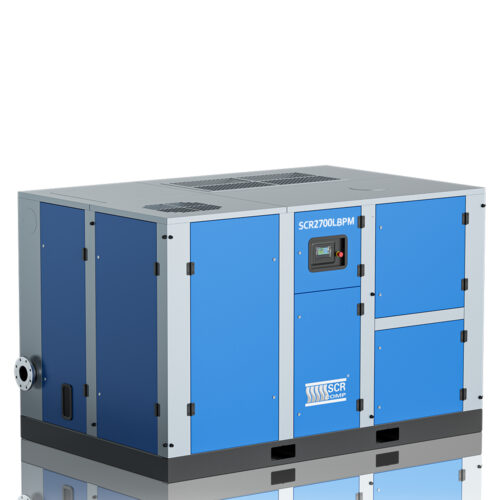
Low pressure Permannent Magnetic VSD screw air compressor SCR2700LBPM
Power Range: 220–250 kWFree Air Delivery: 22.5–75.0 m³/minWorking Pressure: 3 / 4 bar